Line Cook Resume Example & Guide
A real example, 8 bullet points you can copy, salary ranges, and the specific things that get line cook resumes rejected.
Kitchen hiring is about whether you can hold a station through a rush. Covers per service, stations worked, and ticket times are the facts a chef needs, and they are far more informative than a list of cuisines.
Station range is the differentiator. A cook who can work grill, sauté, and garde manger is schedulable in a way a single-station cook is not, and that flexibility is what gets you more hours and faster promotion.
What hiring managers look for in a line cook resume
- Covers per service and restaurant type
- Stations worked and range across them
- Ticket times and consistency under volume
- Food safety certification and sanitation record
- Prep, ordering, and any leadership responsibility
Certifications and licences for line cook roles
List these near the top of your resume. In this field they are eligibility requirements, not accomplishments — a recruiter cannot advance you without them.
- ServSafe Food Handler / Manager
- State food handler card
- HACCP training
- Allergen awareness certification
Line Cook salary range
Approximate US ranges for guidance when you are setting expectations or preparing to negotiate. Actual pay varies considerably by city, employer size, and industry.
Entry
$30K – $38K
0–2 years
Mid
$38K – $50K
3–7 years
Senior
$50K – $68K
8+ years
Line Cook resume example
A Fresh Start layout filled with sample content. Every template on NavPeer is built to parse cleanly through applicant tracking systems — no text boxes, no sidebars that scramble your work history.
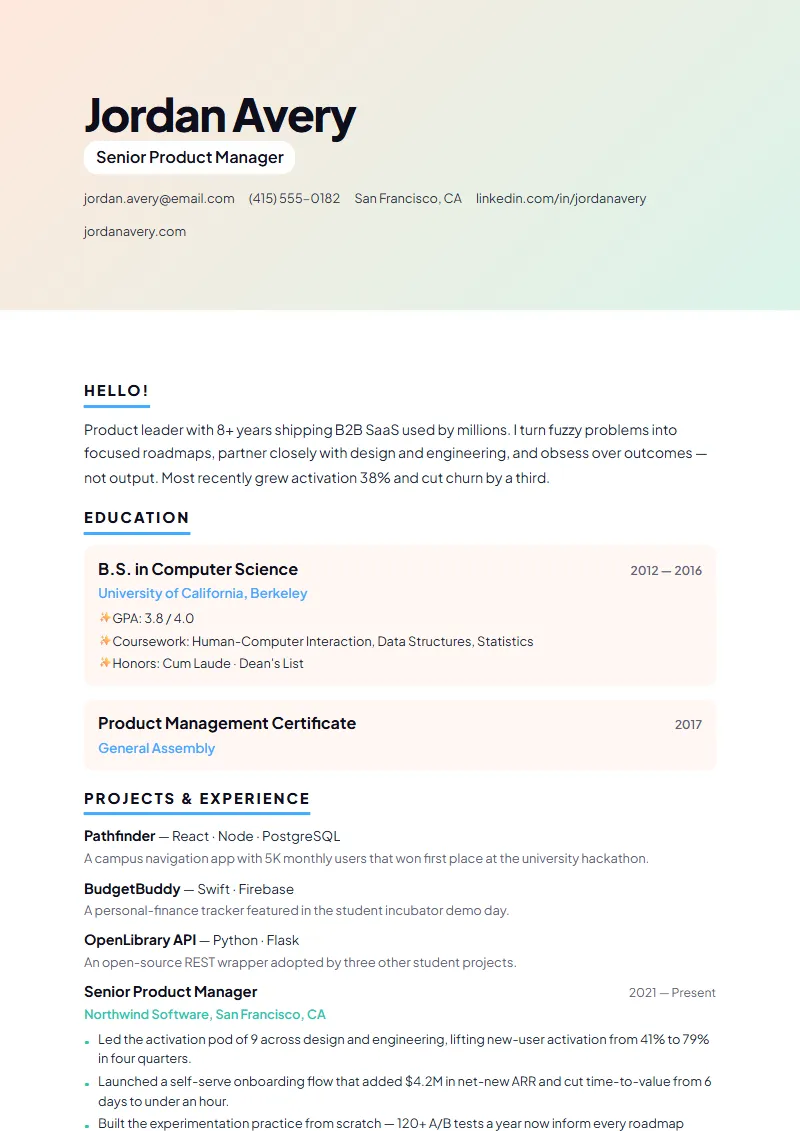
Line Cook resume summary example
Three to four sentences at the top of the page, written in the first person without saying “I”. Rewrite it for every application — the summary is the cheapest place to show you read the job description.
8 line cook resume bullet points you can adapt
Copy any of these and replace the specifics with your own. The numbers here are realistic examples, not claims to borrow — swap in what actually happened, because you will be asked about every figure on your resume.
- Run sauté station through 200–240 cover dinner services in a scratch kitchen, holding ticket times under 14 minutes at full capacity.
- Work grill, sauté, and garde manger interchangeably, covering any station the schedule requires.
- Execute a 28-item menu to spec with consistent plating, with re-fire rate under 1% of tickets.
- Handle prep and mise en place for my station including butchery, sauces, and par cooking, completing setup before service without exception.
- Maintain food safety and sanitation to ServSafe and local health standards, contributing to consecutive 98+ health inspection scores.
- Reduced station waste roughly 20% through better yield on protein fabrication and disciplined par-level prep.
- Trained 4 new cooks on station setup, recipe specs, and service pacing.
- Step in as expeditor during high-volume services, calling the board and coordinating timing across 5 stations.
ATS keywords for this role
Applicant tracking systems match literal strings. Work the ones that genuinely apply to you into your summary, skills section, and bullets — and never into white text or a hidden block, which every modern system detects and most employers treat as disqualifying.
Metrics worth pulling before you write
These are already measured about you. Ten minutes finding the real numbers will do more for this resume than an hour of rewording.
- Covers per service
- Ticket times
- Re-fire rate
- Stations qualified
- Health inspection scores
Section-by-section breakdown
State covers and restaurant type
Covers per service and whether it is a scratch kitchen, chain, banquet, or fine dining room. This tells a chef immediately whether you can hold their line.
List every station you can run
Station range determines how schedulable you are, which determines your hours and your promotion timeline. It is the most practically useful thing on the resume.
Include ticket times and consistency
Ticket times and re-fire rate are the kitchen's quality measures. Almost no cook resume mentions them and every chef cares about them.
Core skills for this role
A human reviewer scans this section to decide whether to read the rest. Keep it to the skills you would be comfortable being interviewed on in depth.
Mistakes that sink line cook resumes
These are the failure modes specific to this role — not general resume advice you have already read a dozen times.
- Listing cuisines rather than stations and volume.
- No covers figure, leaving your capacity unknown.
- Omitting ServSafe, which many kitchens require.
- Ignoring prep, ordering, and waste control, which are the path to sous chef.
- Describing cooking without the speed and consistency dimensions that define line work.
Frequently asked questions
Related resume examples
Build your line cook resume
Start from an ATS-safe template and write your real experience into it. Nothing here invents an employer, a title, or a number — the live ATS score just tells you what the job is looking for.